Why In-Car Charging Solutions Matter More Than Ever
Car accessories
|
May 12, 2026
As we depend on smartphones, GPS devices, and various electronic gadgets for navigation, communication, and entertainment, effective in-car charging solutions have become indispensable. Car chargers and USB adapters act as essential lifelines, ensuring our devices maintain a charge and are ready for use whenever needed. Whether embarking on a quick drive to the store or a long-haul road trip, the demand for fast and efficient charging solutions remains constant. With diverse charging options available, this article delves into the functionality and significance of car chargers and USB adapters, helping you navigate your choices to enhance your driving experience and ensure your devices are always ready when you need them.
The Necessity of Car Chargers and USB Adapters in Modern Driving
In our fast-paced lives, a growing number of devices require charging while we’re on the go. Smartphones, tablets, and wearable technology have become integral to our daily routines and influence how we drive. With navigation applications, music streaming services, and hands-free communication now commonplace, our reliance on electronic devices during travel has reached an all-time high. Consequently, the demand for dependable car chargers and USB adapters has increased dramatically.
These charging solutions do more than just keep us connected; they significantly enhance driver safety by minimizing distractions. When our devices remain charged, it allows us to concentrate on the road without the anxiety of losing access to critical navigation tools or emergency contacts. This convenience extends equally to passengers, who can charge multiple devices at once, making long journeys much more pleasant.
As vehicles evolve into multifunctional hubs, the integration of effective charging solutions becomes an essential aspect of modern car design, ensuring that connectivity and safety are prioritized.
Exploring the Various Types of Car Chargers and Their Real-world Performance
Standard 12V USB Car Chargers
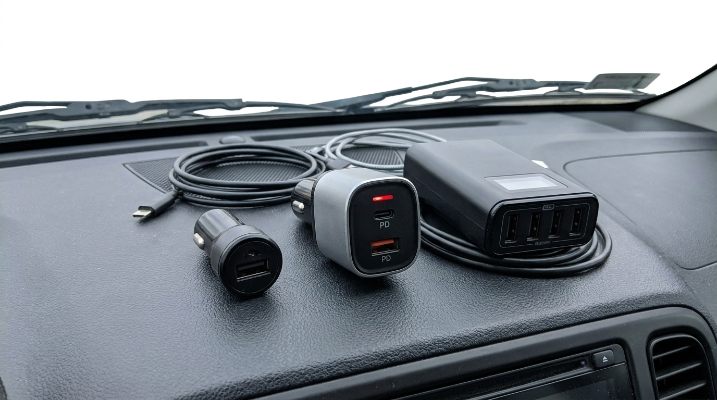
Standard 12V USB car chargers are the most frequently encountered type of chargers in vehicles. Usually located in the center console or integrated into the cigarette lighter socket, these chargers transform the car’s power supply into a format suitable for charging USB devices, including smartphones, tablets, and GPS navigators. They typically deliver power ranging from 1A to 2.1A, facilitating a stable but relatively slow charge. Users often find that charging devices overnight or during short drives suffices, yet in critical situations or on extended trips, this slower charging speed can become frustrating, especially for devices requiring higher power.
Fast Charging (PD and QC) Car Adapters
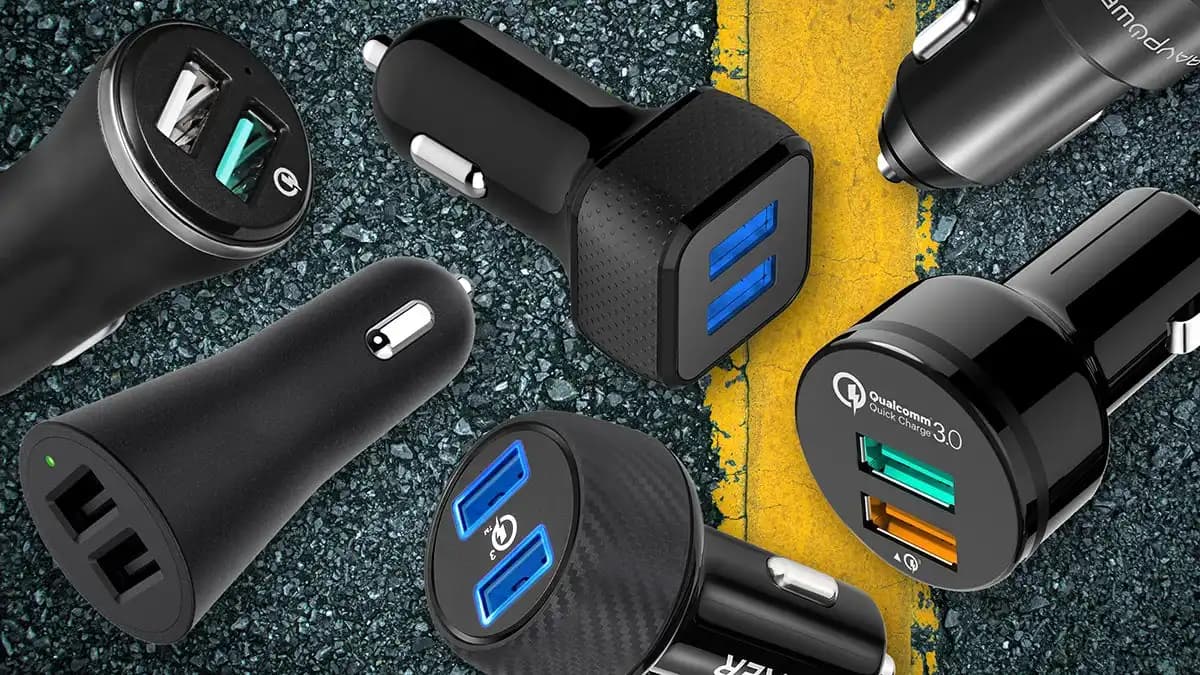
Fast charging technologies, like Power Delivery (PD) and Quick Charge (QC), offer considerable advantages for modern electronics compatible with these systems. PD supports higher power outputs, enabling devices to charge much faster, often reaching from 0% to 50% in approximately 30 minutes. Conversely, QC functions by elevating the voltage supplied to the device, optimizing the time taken to achieve a full charge. In practical terms, drivers using smartphones that support these protocols will benefit from significantly quicker charging rates, transforming brief stops or short breaks into efficient recharge moments, making these charging methods particularly valuable for frequent travelers.
Dual-Port and Multi-Port Car Chargers
Dual-port and multi-port car chargers provide a key advantage by allowing several devices to charge simultaneously. Equipped with multiple USB ports, these chargers can deliver adequate power for multiple gadgets at once. This capability proves especially beneficial during family road trips when various devices are in demand—tablets for entertainment, smartphones for navigation, and possibly other devices streaming music. In everyday scenarios, both families and professionals will find great value in one adapter accommodating everyone’s charging needs, effectively satisfying multiple users without the hassle of dealing with several chargers.
Built-In vs Plug-In USB Adapter Designs
When choosing a car charger, users typically consider built-in USB adapters versus plug-in alternatives. Built-in chargers connect directly to the vehicle’s electrical system, producing a more consistent and efficient power supply. In contrast, plug-in USB adapters are easily replaceable or upgradable, providing added flexibility and mobility. Users commonly observe that built-in chargers often result in a smoother experience, with quicker charging times, whereas plug-in variants can sometimes exhibit erratic performance due to their design.
By gaining insights into the various types of chargers and their real-world effectiveness, drivers can make informed choices tailored to their charging needs on the road.
What Defines a Quality Car Charger in Everyday Life
Having the right car charger while navigating through modern traffic can significantly impact the ability to keep devices charged throughout the trip. Durability remains a top priority; chargers designed to withstand the daily demands of car life—such as temperature changes and constant plugging and unplugging—typically enjoy a longer lifecycle.
Equally important is ease of use; conveniently designed chargers that are simple to plug in and unplug can save drivers valuable time and reduce frustration during travels.
Charging speed further plays a pivotal role. The ability to quickly charge devices minimizes downtime, which is vital for busy users requiring urgent boosts of power. A charger’s versatility—its ability to function across multiple device types, whether smartphones, tablets, or smartwatches—adds to its appeal, especially for those frequently sharing charging resources with companions.
User feedback emphasizes reliability; many drivers recount experiences where their sturdy chargers consistently provided power without failure, thereby enhancing their driving experience and providing peace of mind. For both road trips and daily commutes, a good car charger integrates smoothly into everyday life, proving its significance time and again.
Common Pitfalls Drivers Face When Choosing USB Adapters
Selecting an appropriate USB adapter for your car can notably improve your driving endeavors, yet many drivers fail to consider important factors that lead to frustratingly inadequate or slow charging. A prevalent mistake is neglecting compatibility; many people skip verifying whether their devices necessitate specific adapter types, resulting in unproductive configurations. A traveler, for instance, realized far too late that their generic adapter lacked support for fast charging, leaving them with a drained battery at a crucial moment during their journey.
Another common misjudgment lies in overlooking power requirements. Some drivers select adapters based solely on affordability, only to discover that these budget-friendly options lack the necessary wattage, yielding extended charging durations. For example, an adventurer who chose a low-cost adapter found it couldn't keep their tablet charged while simultaneously being used for navigation, ultimately compromising their travel plans. These experiences serve as vital reminders to carefully evaluate compatibility and power specifications when selecting charging solutions.
Device Type, Car Model, and Usage: Defining Your Needs
Not all devices can be charged identically due to differing power requirements and connection types. For example, while smartphones predominantly utilize USB-C ports or Lightning connectors, tablets often necessitate higher power outputs that require specialized chargers. On a road trip, encountering a situation where your smartphone charger won’t work with your tablet can cause unnecessary hassles.
Moreover, car models significantly impact the availability and effectiveness of charging solutions. Newer automobiles usually feature several USB ports, but the voltage and amperage often vary. Some older vehicles may only offer lower-voltage outputs, thus restricting your ability to charge devices requiring faster energy absorption effectively. Envision embarking on a lengthy journey with kids, only to discover your vehicle’s ports can’t accommodate their gaming tablets. Evaluating your car’s charging capabilities ahead of time is key to sidestepping such inconveniences.
Thus, understanding how your devices interact with your car’s systems ensures you select the appropriate car chargers and USB adapters, ultimately improving your overall driving experience.
Choosing the Best In-Car Charging Solutions: Key Takeaways
Selecting the right in-car charging solution is crucial for ensuring your devices remain powered during travel. Start by assessing the specific needs of your devices: understanding voltage, amperage, and desired charging speeds. Explore the different types of chargers available—USB-A, USB-C, or multi-port options—to discover the best fits for your requirements. Remember that investing in high-quality chargers not only improves your driving experience but also protects your electronic devices from potential damage. Ultimately, a clear understanding of your individual and device needs will lead you to a reliable charging solution, ensuring seamless connectivity throughout your journeys.
Embracing the Need for In-Car Charging Solutions
Investing in dependable car chargers and USB adapters is not merely about convenience; it is essential within the framework of our technology-oriented lives. With our increased reliance on devices for navigation, communication, and entertainment, ensuring they are consistently powered is becoming critically important. Consider your specific charging needs and recognize the rapidly evolving state of technology in this field. With a myriad of options at your fingertips, making informed decisions will enhance your driving experience and keep you connected at all times. The right charger can significantly elevate your journey—choose wisely.
Related Posts

How Car Air Fresheners Improve the Driving Experience

6 Best Dash Cams With Night Vision and Parking Mode in 2026

Top 10 Upcoming SUVs Everyone Is Waiting For in 2026 and Beyond

Best Tire Inflators for Cars Portable Air Compressor Review Guide for 2026
Toyota Camry 2026 vs Honda Accord 2026 Which Midsize Sedan Is the Better Buy